
That They May Be One
Summary
We're sorry to share that the recording of this sermon was lost due to a technical issue. We apologize for the inconvenience. In its place, we're posting the written version below.
What does it mean to live as though everything is a gift? In John 17, hours before his arrest, Jesus prays for the unity of his future followers — not for their safety or success, but that they would be one as he and the Father are one. Matt Crummy traces that prayer through the loneliness of modern life, the anxiety of never having enough, and the erosion of our shared common life, and arrives at a vision rooted in the Eucharist: that humanity was always meant to receive the world as a gift from God and offer it back in gratitude and love. The automat, the social media feed, and the table of the Lord turn out to be telling the same story — just with very different endings.
Questions for reflection
Hartmut Rosa describes modern life as driven less by the desire for more and more by the fear of having less. Do you recognize that anxiety in yourself? How does it shape the way you relate to others?
What does it look like in practice to receive your life — your work, your relationships, your time — as a gift from God rather than something to be seized and managed?
Schmemann describes Adam's failure as a failure to live eucharistically: taking the fruit as something to be consumed for himself rather than offered back to God. Where do you see that same impulse in your own life?
Jesus prays for unity at the conclusion of a shared meal. Who are the people you are regularly sharing a table with — and who is missing from it?
Borgmann argues that shallow things aren't neutral; they actively work against our depth and maturity. What in your current habits or environment might be quietly diminishing you?
What would it look like for you to insert grace intentionally into one relationship or system in your life this week — not waiting for it to drift there on its own?
Transcript
Scripture
20 "I pray also for those who will believe in me through their message, 21 that all of them may be one, Father, just as you are in me and I am in you. May they also be in us so that the world may believe that you have sent me. 22 I have given them the glory that you gave me, that they may be one as we are one — 23 I in them and you in me — so that they may be brought to complete unity. Then the world will know that you sent me and have loved them even as you have loved me.
24 "Father, I want those you have given me to be with me where I am, and to see my glory, the glory you have given me because you loved me before the creation of the world.
25 "Righteous Father, though the world does not know you, I know you, and they know that you have sent me. 26 I have made you known to them, and will continue to make you known in order that the love you have for me may be in them and that I myself may be in them."
"That they may be brought to complete unity" — that's how Jesus puts it to his disciples. And the "they" he's talking about is us, at least in part.
This morning, we're jumping in at the tail end of a long evening for Jesus and the disciples, one we sometimes call the Last Supper, though the meal itself isn't included in John's account of the evening. The passage we're examining today is part of the conclusion of a discourse between Jesus and his disciples — a notable moment in his journey to the cross, which is what we've been retracing this Lent in our sermon series and midweek discussion groups.
Each week, we're looking at the words and practices of Jesus and asking how his life, death, and resurrection speak to our lives today. How does he live? How does he die? How do the rhythms of his life shape our relationship to God — and to each other? How do they shape our relationship to work and food and leisure and technology?
Jesus' words in John 17 are also a bit disorienting when you sit with the context. He is just hours from his arrest, and he knows it. And in the midst of this crescendo, he takes time to pray — in front of and with his disciples. It feels a little like someone sharing wisdom in the days before their own death.
And in a move that reveals just how broadly he's viewing things at this moment, he prays for the future. For people who would become his followers in the years ahead. Perhaps even for people sitting in a room in Des Moines in 2026.
What he asks for — the thing he returns to again and again in this prayer — is unity. Oneness. That they may be one. His focus here isn't our safety or our success by any worldly measure, or even that we'd be particularly faithful in the churchiest sense. Just that there'd be union.
He prays that the culture of his future followers would mirror the relationship between him and God the Father. Which raises some obvious and uncomfortable questions for people like us, living in a time when we have seemingly endless tools for connection and yet seem driven further and further apart from each other.
Are we listening to the prayers of Jesus? Are we moving toward his desires or away from them? Do we see this as central or peripheral? And why?
The Automat
One of the weirder things I have a fascination with is a modern fast-food concept that started in Germany in the 1890s. It spread quickly to the United States, reaching Philadelphia, New York, and other major cities. They were called automats, and they were around in the US until 1991.
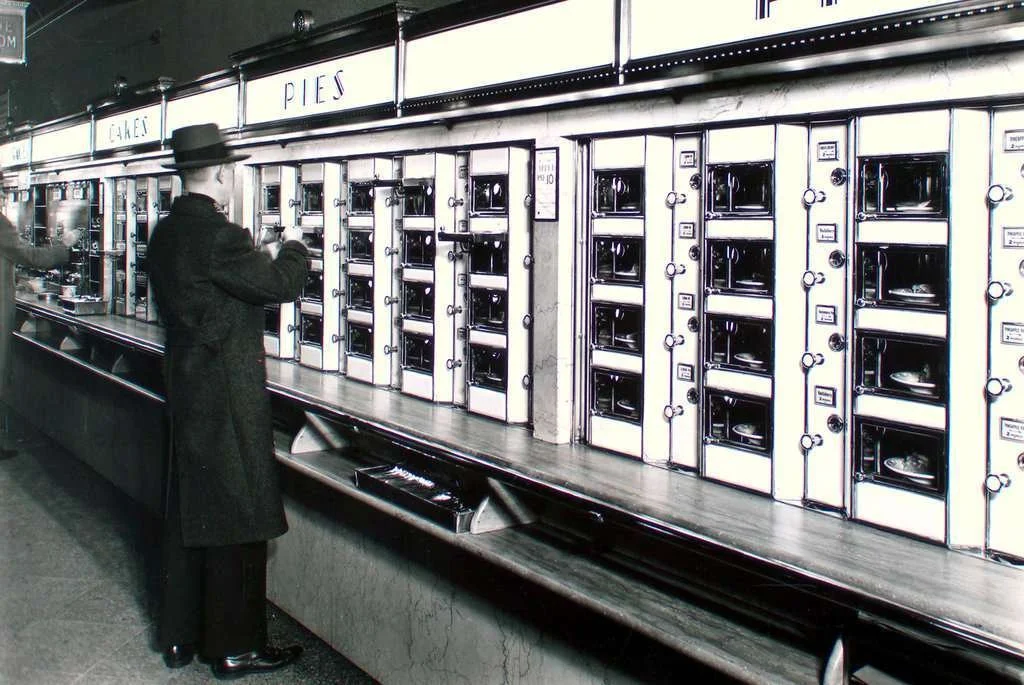
Automats carried prepared food displayed behind small glass windows and dispensed it by accepting coins in a slot. There were no waiters and no orders to place. Some had tables, but dining rooms were slowly abandoned altogether — which essentially led to a walk-in vending machine concept.
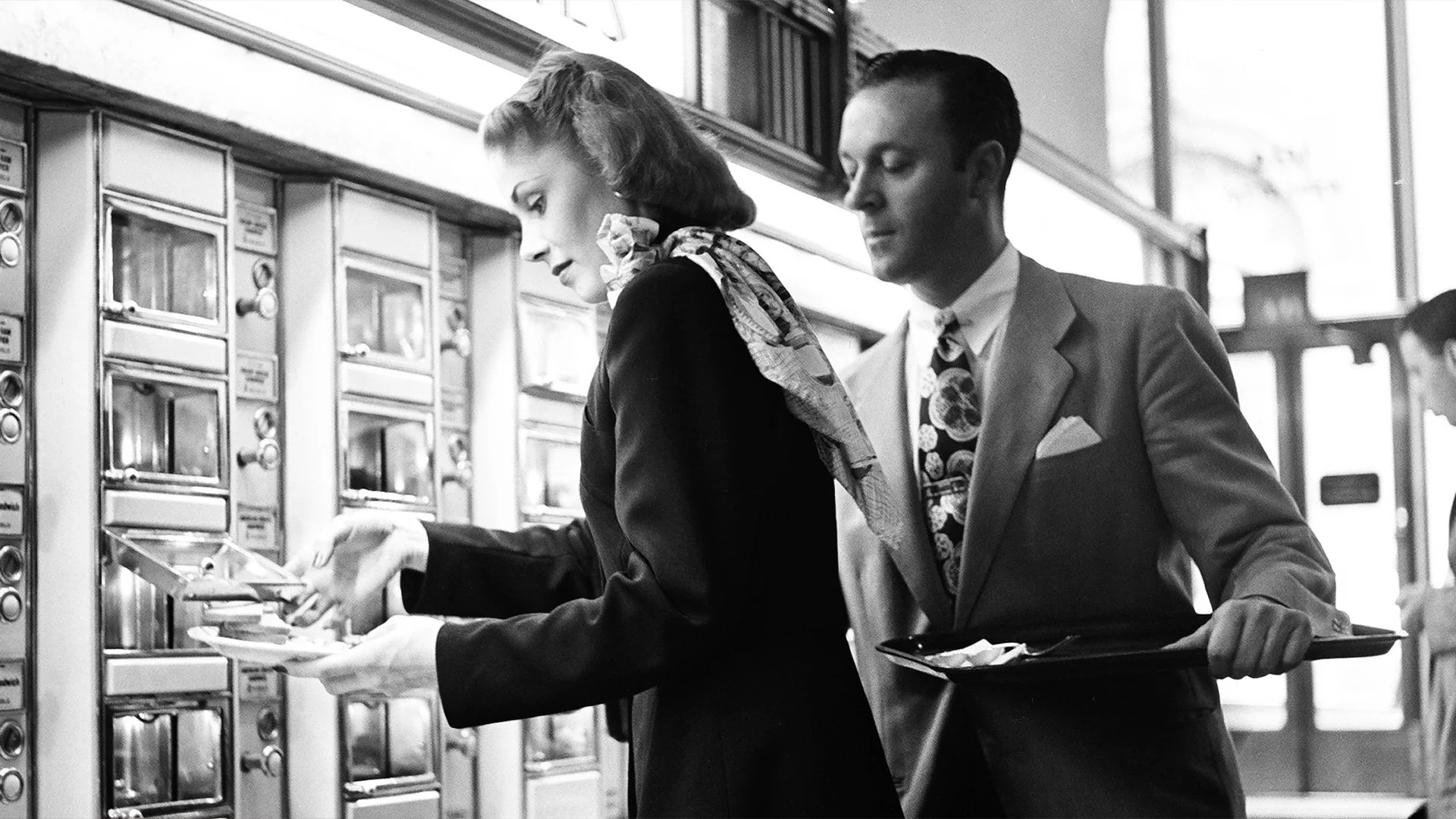
The automat is a quintessentially individualist artifact of the modern era. At its best, it was a gathering place in the big city, accessible at a reasonable price. At its worst, it was one of many aspects of society that propped up an increasingly atomized way of life — one that connects directly to today's upswing in reported loneliness, somehow accompanying all of this so-called progress.
The automat is also the subject of one of my favorite Edward Hopper paintings, which happens to be owned by the Des Moines Art Center — almost certainly the most famous piece in the museum's permanent collection. It shows a woman seated alone. She's dressed up. It's late in the evening. She has a cup of tea or coffee. You can see the reflection of the interior lights in the exterior window. The room is classy but sparse. Like Hopper's Nighthawks, the piece seems to communicate something about the loneliness and isolation of the city. There she sits — an empty chair beside her, no one else in sight.
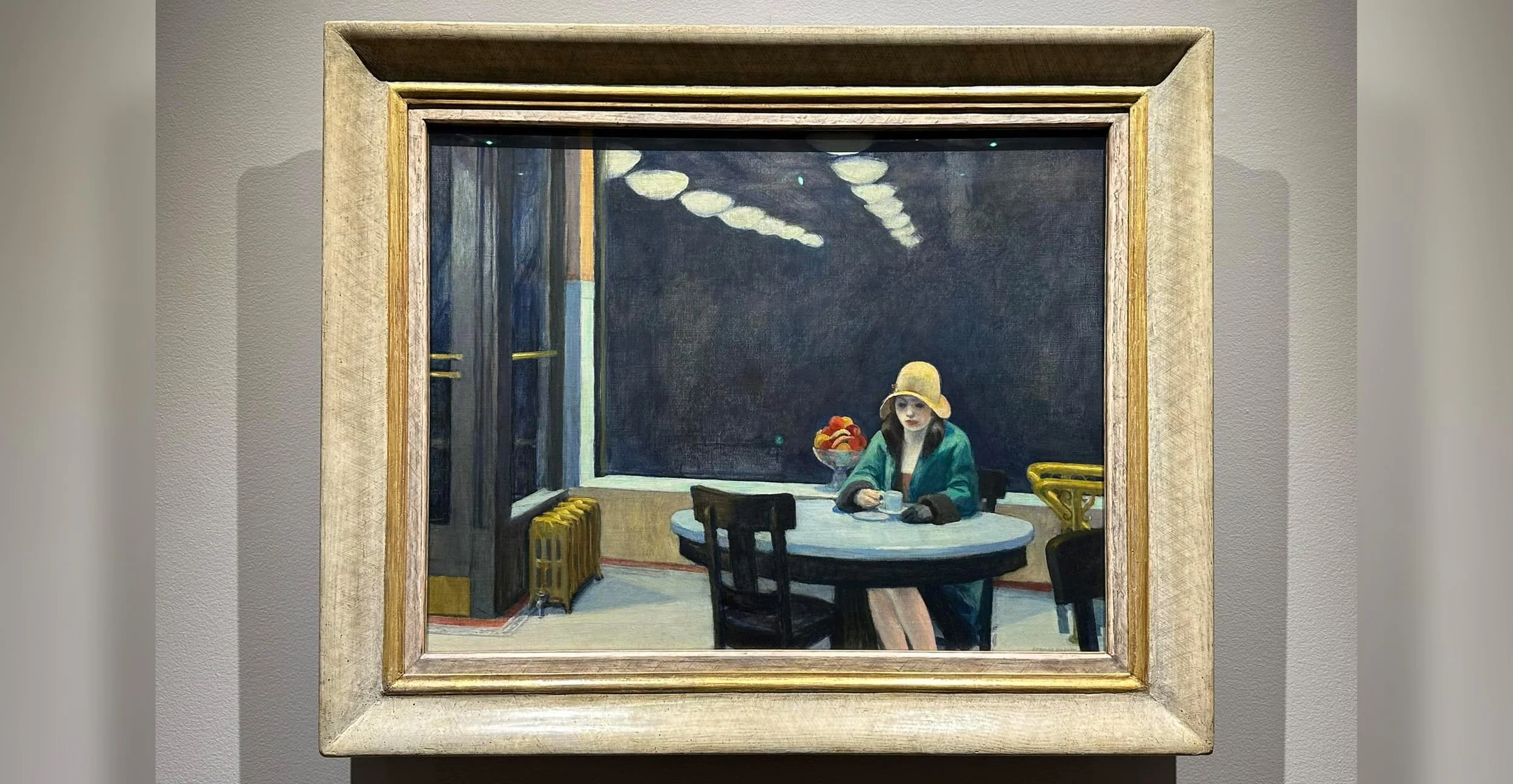
What would be the primary difference if we took a similar photo today? Doesn't it feel like you could simply replace her cup with a smartphone, and it would look as though it were painted in 2026?
The Anxiety of Modernity
Here's something you may have come to realize already: life in the modern age is actually quite difficult. Not difficult in the ways things were in the Middle Ages — I am very grateful for indoor plumbing — but difficult in its own particular ways.
German sociologist Hartmut Rosa identifies two important animating elements of how we moderns tend to operate. First, we aren't primarily driven by the desire to have more and more. More often, we are driven by the fear of having less and less. Because of the speed and complexity of modern life, if we slow down even to catch our breath, we risk falling behind. American culture will rarely tell you "that's enough." Parents are no longer motivated primarily by trying to give their children a better life than they had; they're just trying to ensure they don't have a worse one. That is a real shift in our collective psychology.
And so the complementary element is that we continually give ourselves to expanding our share of the world. As Rosa puts it:
"Our life will be better if we manage to bring more world within our reach: this is the mantra of modern life, unspoken but relentlessly reiterated and reified in our actions and behavior."
If you have millions of people living anxiously on the edge of falling behind, all of them driven to continually scale themselves up and out, you have a recipe for conflict. People begin to see others as competitors first, or tools to be utilized in their efforts to stay afloat or gain ground.
What gets lost in this system? Patience. Grace. Private generosity. Forgiveness. Accompanying someone in grief. Space for learning disabilities. Room to make mistakes.
This is the key point for today: we are losing our shared common life. We are losing our vision for the common good — and any sense of God's common grace working in and through all kinds of people and systems, not just those created and governed by Christians.
The philosopher Hannah Arendt simply called this common space between us "the world." In her vision, we construct worlds together by showing up, speaking, acting, disagreeing, and building things that outlast us. It's inherently plural. It requires difference and friction.
But this world-building is increasingly moderated and facilitated by for-profit companies, meaning that the places we go to try and connect have a different primary interest than our own health and well-being. That doesn't make them evil; it just means our common life is buffered by for-profit mediators.
"I Have Given"
Here we find a surprising parallel to the disciples' experience of ancient Israel and the Roman Empire. As Jesus is praying for his disciples and for future believers like us, Judas is selling him out to the empire.
Back to our passage, John 17:22–23:
"I have given them the glory that you gave me, that they may be one as we are one — I in them and you in me — so that they may be brought to complete unity. Then the world will know that you sent me and have loved them even as you have loved me."
Prayer is a thoroughly anti-modern act. What a beautiful thing Jesus is doing here. And what a gift that these words were transcribed and passed down.
"I have given."
This is the hinge on which Christianity turns. God is the first actor. He takes action. What would the universe be without the creative power and genius of God? What do we have that is not, in some way, a gift from him?
God has given us the gift of his glory. He has shared himself with us. He has invited us into his love — into the holy family, in a sense.
In discussing the early Christian church, Arendt notes that "the structure of communal life was modeled on the relationships between the members of a family because these were known to be non-political and even antipolitical."
Jesus is establishing a radical new paradigm with massive reverberations throughout history — one not based on position or profit or politics. Counter to the religious cults of his day, which emphasized endlessly trying to gain the favor of the gods for fertility or harvest, Jesus shows up and talks about God giving to them. To us. He prays for our oneness and then says:
"Then the world will know that you sent me and have loved them even as you have loved me."
Jesus wants us to know — wants the world to know — that he loves us. He has no needs and yet offers himself freely.
Grace in the Machine
In the person of Jesus, we learn that to give is to be like God. We learn grace — goodness with no expectation of reciprocation. Kindness with no strings attached.
And yet in the so-called Christian West, we seem to be sprinting toward an ethos that is brazenly unkind and calculating. Especially in the United States, people are assuming the worst of everyone else. We've been discipled into a decidedly anti-human culture.
One place we see this is on social media, though there are many ways it's eroding. And like many technological innovations, it's not all bad — I found my current job through social media, and it's a significant part of my work as a marketer. But that also means I think about it a lot.
Social media companies monetize and industrialize — and at times exploit — the erosion of our shared common life. While they simulate embodied human connection, they often produce its opposite. These companies depend on you and me spending as much time as possible on their apps to serve advertising. And the problem is that Christians are letting both the content and the medium malform us. We begin to see others as content creators — people who either make us laugh or make us angry. We react and react and react. We scroll through a digital circus and tech companies curate the rings they present to us, over and over.
Philosopher Albert Borgmann, who spent much of his career thinking carefully about technology, put it this way:
"In circumstances where I am surrounded by shallow commodities, I tend to become shallow as well. Commodities do not just obviate the exercise of my more profound mental and physical capacities; they actually repel them; my best capabilities must atrophy, and my life will be terribly diminished."
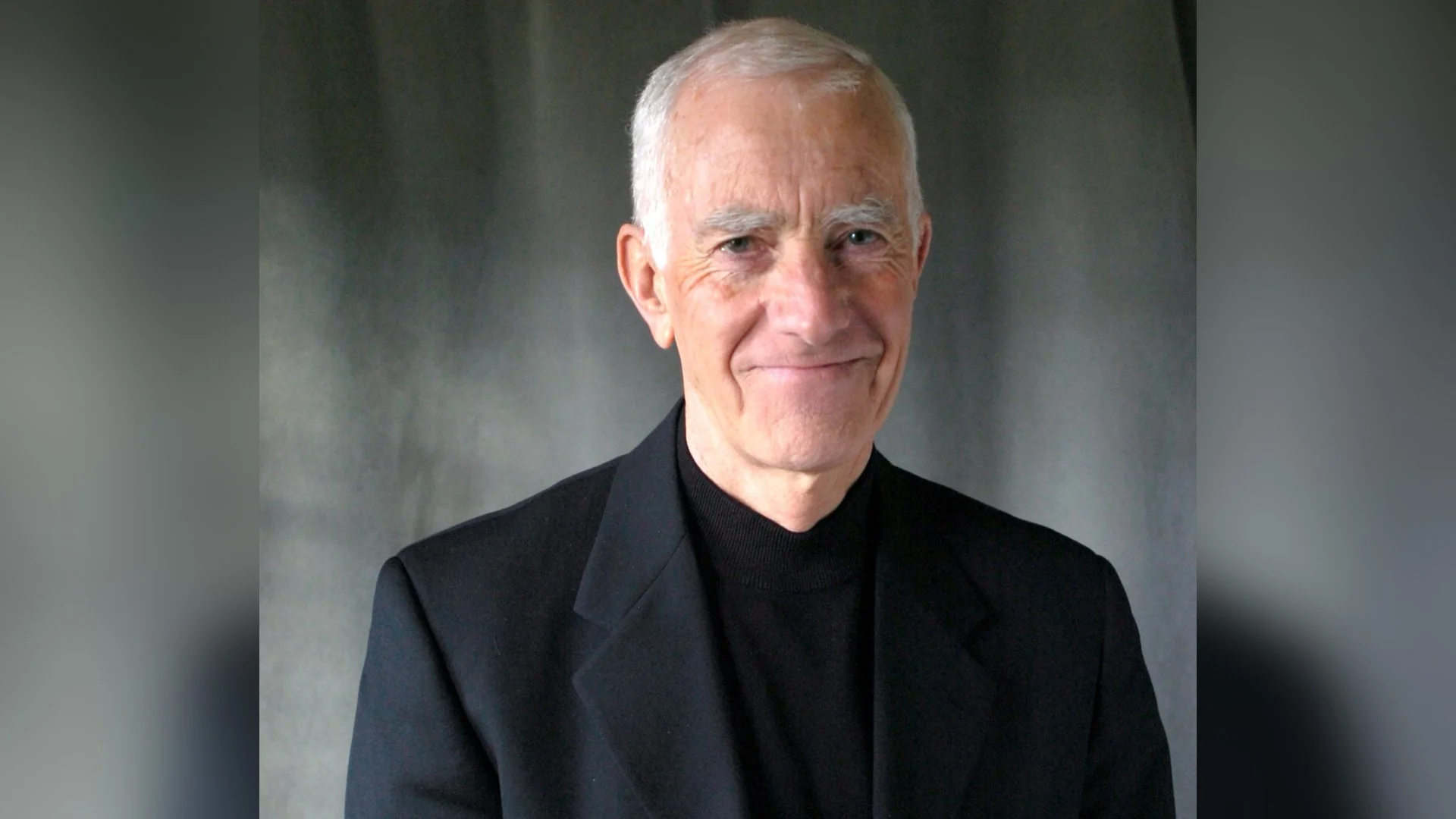
He's saying that shallow things aren't neutral — they actually work against our growth and maturity. This isn't something to fear so much as something to be aware of and proactively resist. The pull is toward the shallow, toward diminishment, toward being turned into a product, toward our addictions being monetized by people who benefit from our deeper and deeper dependence on them.
The primary thing I want to underscore for us as Christians is this: it takes intentionality to insert grace into the machine. That's true of social media, of economics, of education, of medicine. Things don't drift naturally toward long-suffering. Toward giving someone a second chance. Toward generosity. Toward wholeness. Toward grace.
Social media apps literally have a thing called a "feed." It's a little dystopian — maybe a lot dystopian. As though we're feeding on an endless stream of content. And eventually, it should be no surprise when we find ourselves alone at the automat.
We really do need a different way.
Bread and Table
In John 6, after feeding the five thousand and walking on water, Jesus speaks to a crowd:
32 "Very truly I tell you, it is not Moses who has given you the bread from heaven, but it is my Father who gives you the true bread from heaven. 33 For the bread of God is the bread that comes down from heaven and gives life to the world."
34 "Sir," they said, "always give us this bread."
35 Then Jesus declared, "I am the bread of life. Whoever comes to me will never go hungry, and whoever believes in me will never be thirsty. 36 But as I told you, you have seen me and still you do not believe. 37 All those the Father gives me will come to me, and whoever comes to me I will never drive away. 38 For I have come down from heaven not to do my will but to do the will of him who sent me. 39 And this is the will of him who sent me, that I shall lose none of all those he has given me, but raise them up at the last day. 40 For my Father's will is that everyone who looks to the Son and believes in him shall have eternal life, and I will raise them up at the last day."
An alternative picture the New Testament consistently offers is the culture of the table. In the ancient world, the image of daily bread carried far more weight than it does today. Bread wasn't an industrial commodity. It was made locally and required visible labor from field to table — you likely would have known where your grain came from. Each step reminded you that this was central to your very survival. For Jesus to describe himself this way was to say: There's a hunger and a thirst you have that can never be satisfied by anything you do. I am the answer to this deeper problem — one you're both aware of and cannot solve.
And in our passage today, it's no accident that Jesus is talking about oneness at the conclusion of a shared meal. Meals required planning, labor, and cooperation. They required sacrifice — people united around the shared goal of satisfying their hunger and thirst.
Today, we remember the Lord each week in communion — what some call the Eucharist, from the Greek word for thanksgiving. Communion is not a religious ritual layered on top of ordinary life. It is a participation in the very life of God. And what Jesus prays in John 17 is what the church enacts every time it breaks bread together.
Orthodox priest and theologian Alexander Schmemann has been incredibly helpful to me here. For Schmemann, "eucharistic" describes the fundamental human vocation: to receive the world as a gift from God and offer it back to him in gratitude and love. In one of his most striking passages, he writes:
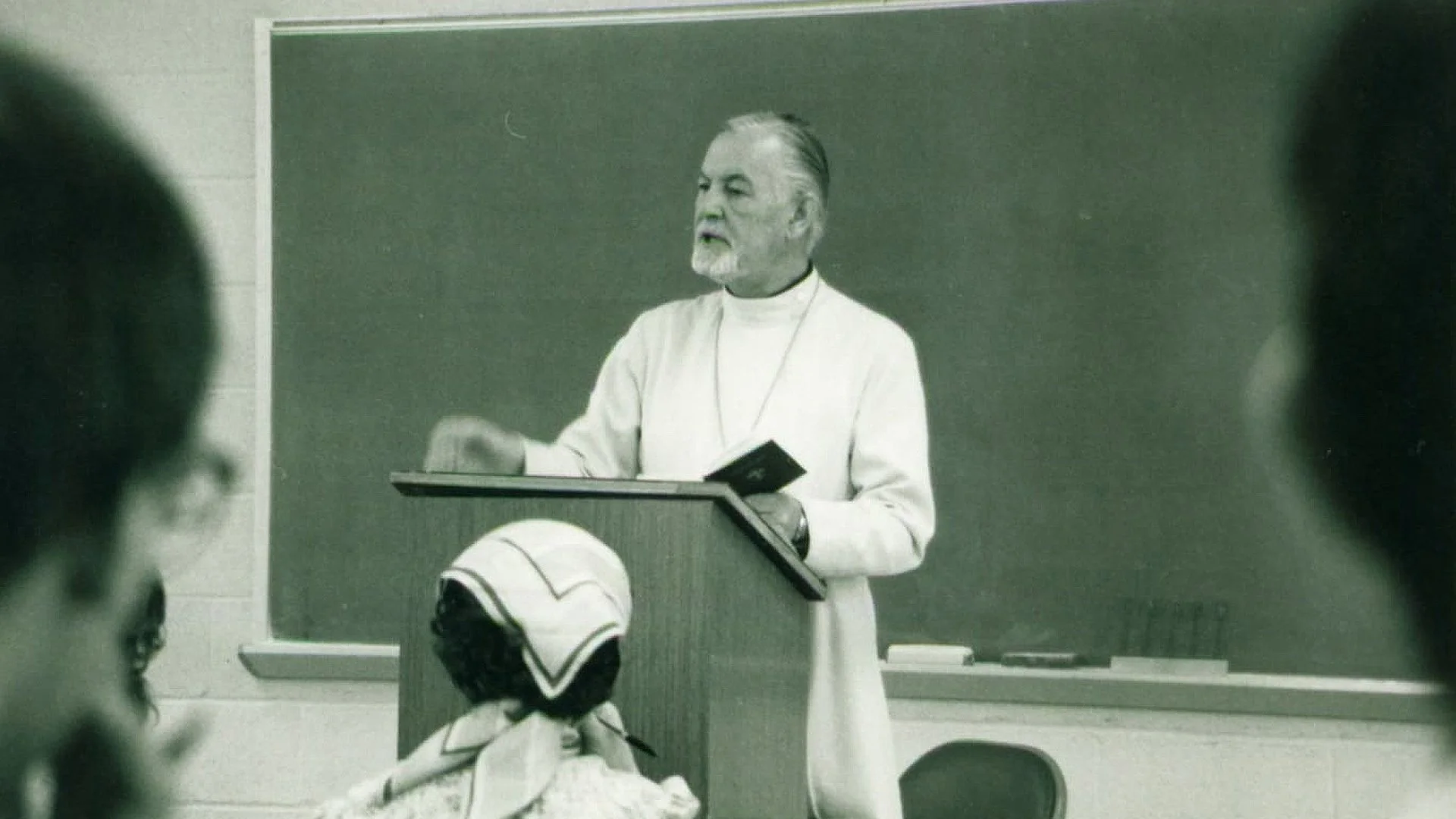
"God was his very life. And he gave this perfect and eucharistic life to us. In him God became our life.
And thus this offering to God of bread and wine, of the food that we must eat in order to live, is our offering to him of ourselves, of our life, and of the whole world. 'To take in our hands the whole world as if it were an apple!' said a Russian poet. It is our Eucharist. It is the movement that Adam failed to perform, and that in Christ has become the very life of man: a movement of adoration and praise in which all joy and suffering, all beauty and all frustration, all hunger and all satisfaction are referred to their ultimate End and become finally meaningful.
Yes, to be sure, it is a sacrifice: but sacrifice is the most natural act of man, the very essence of his life. Man is a sacrificial being, because he finds his life in love, and love is sacrificial: it puts the value, the very meaning of life in the other and gives life to the other, and in this giving, in this sacrifice, finds the meaning and joy of life."
We receive the world as a gift from God and offer it back to him in gratitude and love.
The Eucharist is, in Schmemann's view, the paradigm of this posture — but the posture itself is what humanity was always meant to embody. Adam's failure was precisely a failure to live eucharistically: he took the fruit as something to be seized and consumed for himself.
The mistakes of modernity aren't so new, it turns out.
Closing
What would it look like to fully embrace this posture toward life? How would it change the way you interact with others? The way you worship? Rest? Work?
I can't give you a sermon that will make us united. It will never work that way. But God's Spirit absolutely can change us — change our hearts and our habits. And it will look like receiving life as a gift and sharing it with others at the table who are different from you. Jesus knows what he's praying. He is not naive.
20 "I pray also for those who will believe in me through their message, 21 that all of them may be one, Father, just as you are in me and I am in you. May they also be in us so that the world may believe that you have sent me. 22 I have given them the glory that you gave me, that they may be one as we are one — 23 I in them and you in me — so that they may be brought to complete unity. Then the world will know that you sent me and have loved them even as you have loved me.
24 "Father, I want those you have given me to be with me where I am, and to see my glory, the glory you have given me because you loved me before the creation of the world.
25 "Righteous Father, though the world does not know you, I know you, and they know that you have sent me. 26 I have made you known to them, and will continue to make you known in order that the love you have for me may be in them and that I myself may be in them."
The sacrificial love of God reveals that even he finds meaning in loving others. That includes you and me. And in this, we find meaning and joy. Jesus clearly isn't worried about public relations here — if he were, he definitely wouldn't have asked people like us to be involved in this mess.
So we don't hedge where God is all in. Love freely. Confound others with love. Baffle them with grace. And in this, we share in the life of Christ.
One Last Thing
Last week, I was in a hurry and needed a quick dinner solution for the family. I ordered from my phone and went to pick it up. I walked in, told the employee my name, and he looked at me like I was an elderly man in a nursing home. He pointed to something labeled "Pizza Portal Pickup."
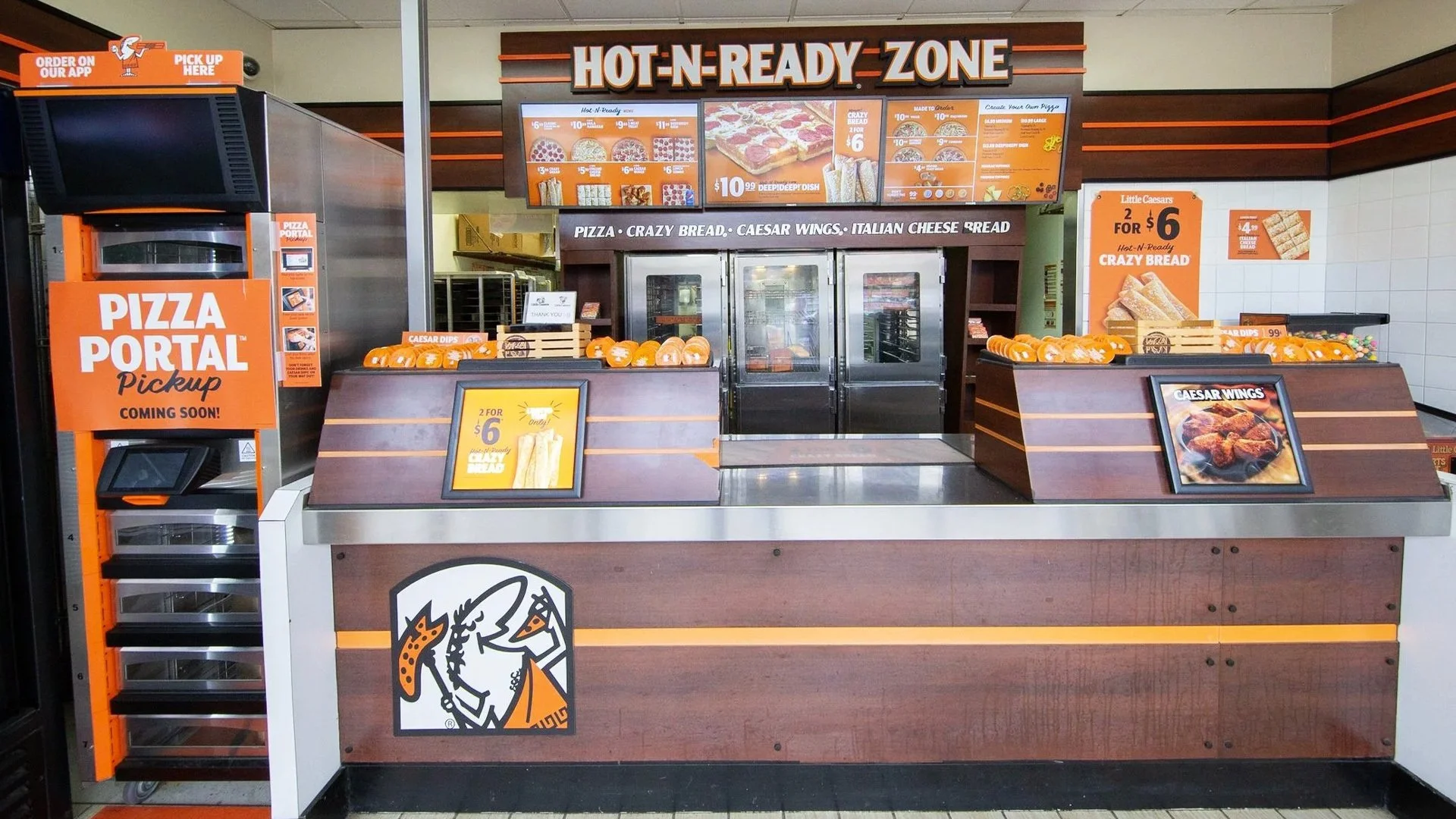
It was an automat.
Here I am giving a sermon about the excesses of modernity and the dehumanizing effects of consumer culture, and just a week ago there I was in the Hot-N-Ready Zone, unlocking a glass drawer with a special code I'd received on my iPhone to access two pizza boxes. I've stayed at Airbnbs that were far less secure.
Here's the point. Life in 2026 really is kinda weird. And pretty complicated. Maybe you're going to fast from social media this week, and then find yourself accidentally twenty videos deep in Norwegian forest cat content. Don't sweat it. It's alright.
We are hungry people.
But it takes practice to learn new patterns, and it doesn't change the fact that I want to live differently. I don't want to hate people on the internet or off the internet. I don't want to be an anxious person. I don't want my mood constantly swayed by what I'm served in a feed. I don't want the way I treat others to be deeply shaped by the norms of social media.
Practically speaking: if you want to get off your phone and need something to do this week, the Des Moines Art Center is free, and Edward Hopper's Automat is just hanging on a wall there. Sometimes it can feel like a genuine gift of grace to go to a quiet place where it's totally normal to just sit down and stare at the wall. I invite you to do that as an act of radical countercultural reformation. Maybe bring a friend.
And remember grace. God loves you. And he loves your neighbor. Let's spend more of our lives sharing bread and wine with others. Life really is such a precious gift.
